
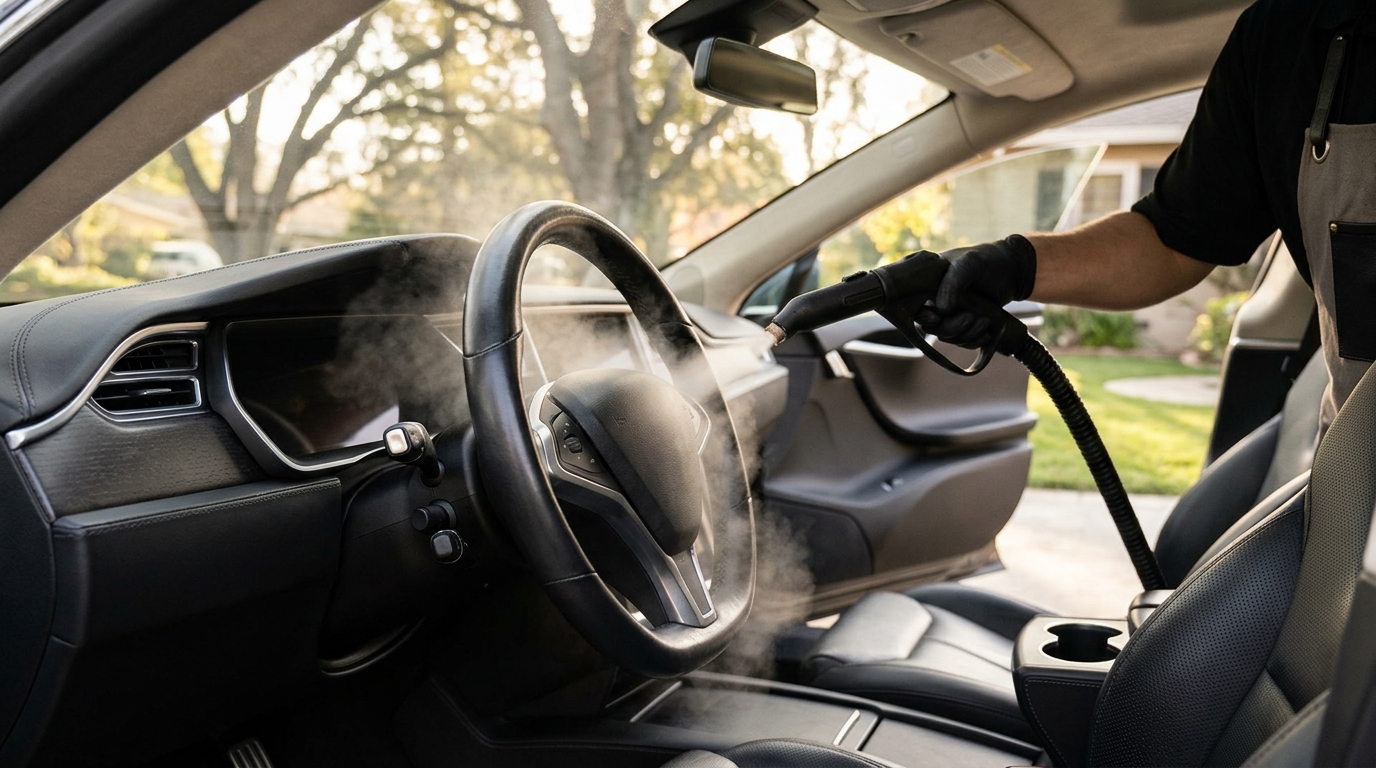
Steam sanitization is a thermal disinfection process that uses high-temperature water vapor to kill bacteria, viruses, and mold spores on vehicle surfaces. For Sacramento drivers, this method is an effective way to maintain a healthy cabin environment without relying on harsh chemical cleaners. Detail X Mobile Detailing emphasizes that proper technique is critical to achieving a true medical-grade clean while protecting your vehicle's materials. This guide outlines the essential steps to perform this process safely and effectively in your own driveway.
1. Pre-Clean the Interior Surfaces
Remove loose debris before applying heat to ensure the steam reaches the fabric fibers. Start by vacuuming all carpets, seats, and crevices to eliminate dust, pet hair, and crumbs. Loose dirt can trap moisture and create a breeding ground for mold if not removed first. Wipe down hard surfaces like the dashboard and door panels with a damp microfiber cloth to lift surface grime. This preparation step ensures the steam penetrates the material rather than just pushing dirt deeper.
2. Select the Correct Steam Nozzle
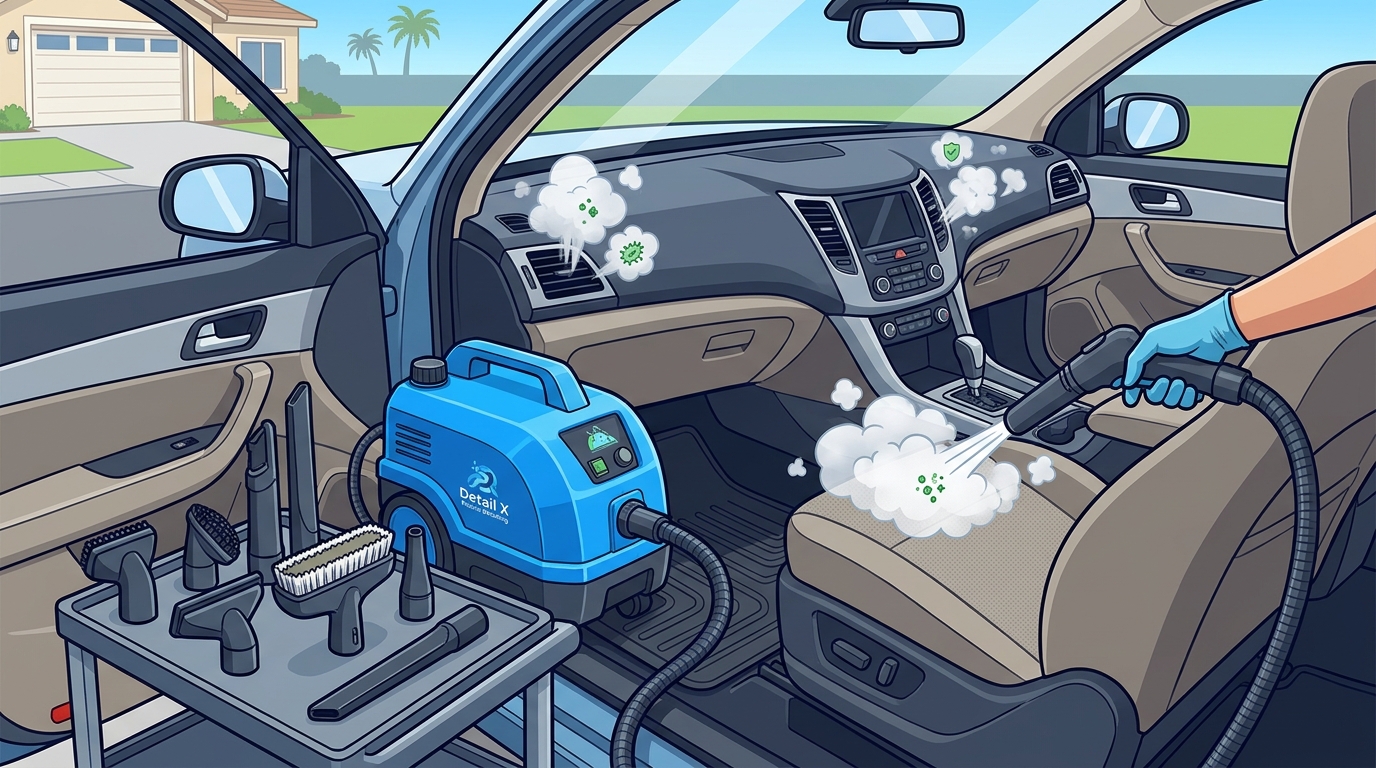
Match the nozzle shape to the surface type to maximize contact time and coverage. Use a flat, wide nozzle for large areas like seat cushions and floor mats to cover ground quickly. Switch to a narrow, pointed nozzle for tight spaces such as seatbelt buckles, cup holders, and air vent grilles. A brush attachment is ideal for textured fabrics and carpets, as it agitates the fibers while the steam sanitizes. Using the wrong tool can lead to uneven coverage or potential damage to delicate electronics.
3. Maintain a Safe Distance from Electronics
Keep the steam nozzle at least two inches away from screens and sensitive components. Modern vehicles are filled with electronics that can be damaged by moisture and heat. Avoid directing steam directly at the infotainment screen, digital instrument cluster, or exposed wiring. If you must clean near these areas, use a dry microfiber cloth instead. This precaution prevents condensation from forming inside the device, which can cause short circuits or permanent damage.
4. Apply Steam in Slow, Overlapping Passes
Move the nozzle slowly to allow the heat to dwell on the surface long enough to kill pathogens. Do not rush the process, as steam needs time to penetrate the fabric and reach the required temperature. Move the nozzle in a slow, steady motion, overlapping each pass by about 50% to ensure no spots are missed. Hold the nozzle slightly above the surface to avoid saturating the material with water. This technique ensures consistent sanitization across the entire area.
5. Focus on High-Touch and Allergen Zones
Prioritize areas where hands, faces, and pets make frequent contact. Pay extra attention to the steering wheel, gear shift, door handles, and seatbelts, as these are the primary vectors for germ transmission. If you have pets, focus on the seats and carpets where they sit, as these areas accumulate dander and odors. Steam is particularly effective at breaking down organic matter and neutralizing odors in these high-traffic zones. This targeted approach maximizes the health benefits of the sanitization process.
6. Allow Surfaces to Dry Completely
Ensure all treated areas are fully dry before closing the car doors to prevent mold growth. After steaming, leave the car doors and windows open to allow for maximum airflow. Use a fan or a leaf blower on a low setting to speed up the drying process if needed. Do not close the car until you are certain the carpets and seats are dry to the touch. Trapped moisture is the primary cause of musty odors and mold development after a steam clean.
7. Apply a Protective Finish
Seal the sanitized surfaces to repel future dirt and make cleaning easier. Once the interior is dry, consider applying a fabric protector or a light coat of spray sealant to the seats and carpets. This creates a barrier that helps repel liquids and prevents stains from setting in. For leather surfaces, use a dedicated leather conditioner to restore moisture lost during the steam process. This final step extends the life of your interior and maintains the showroom look achieved through sanitization.
Choosing the Right Approach
If you lack the equipment or time to perform a thorough steam sanitization, professional mobile detailing is a viable alternative. Detail X Mobile Detailing offers complete interior resets that include steam cleaning and decontamination, ensuring a deep clean without the hassle of DIY. You can book your appointment to have a professional handle the process at your home or office.
Frequently Asked Questions
Can steam cleaning damage car leather?
Yes, if used incorrectly. High-heat steam can dry out and crack leather if held too close or for too long. Always use a low-heat setting and keep the nozzle at a distance, followed by a leather conditioner to restore moisture.
How often should I steam sanitize my car interior?
It is recommended to steam sanitize your car every 3 to 6 months, or more frequently if you have pets, allergies, or young children. Regular sanitization helps maintain a healthy cabin environment and prevents the buildup of odors.
Does steam kill viruses in car seats?
Yes, steam at temperatures above 130 degrees Celsius is effective at killing most bacteria and viruses on fabric surfaces. The heat denatures the proteins in the pathogens, rendering them inactive.
Can I use steam on my car's dashboard?
You can use steam on the dashboard, but you must be careful around vents and electronics. Use a low-steam setting and a narrow nozzle to clean the plastic surfaces without pushing moisture into the air conditioning system.
What is the difference between steam cleaning and shampooing?
Steam cleaning uses heat and water vapor to sanitize and lift dirt, while shampooing uses a chemical solution to break down stains. Steam is better for sanitization and odor removal, whereas shampoo is better for deep stain extraction.