
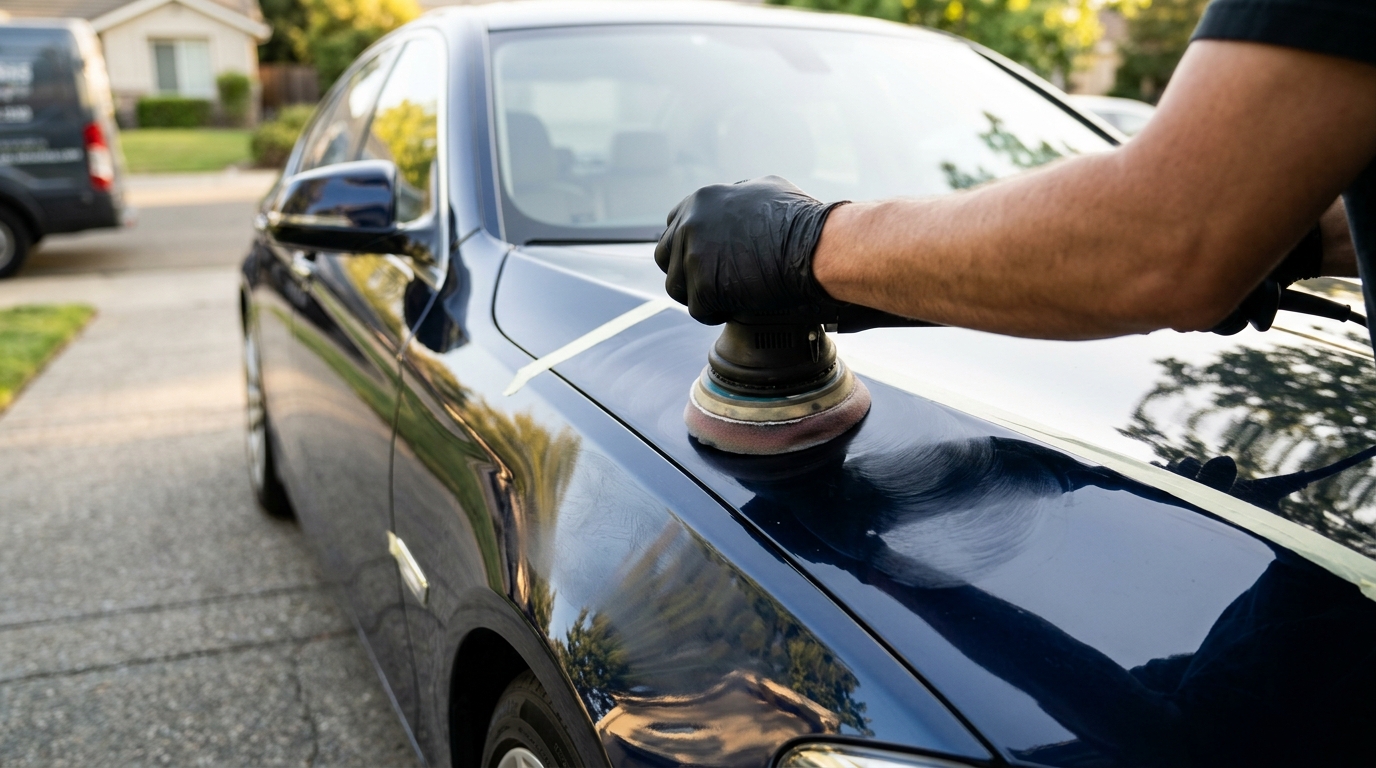
Machine paint correction is a mechanical process that removes a microscopic layer of clear coat to eliminate surface defects like swirl marks and oxidation. By using specialized abrasives and machine power, detailers level the paint surface, restoring its original clarity and depth. This method is far more effective than hand polishing for deep or widespread defects.
The Mechanics of Machine Polishing
Machine paint correction is the use of a rotary or dual-action polisher to apply abrasive compounds to a vehicle's clear coat. The machine spins at high speeds, allowing the abrasive particles to cut into the paint at a consistent rate. This consistency is key; hand polishing often results in uneven pressure, which can leave behind residual defects or create new ones.
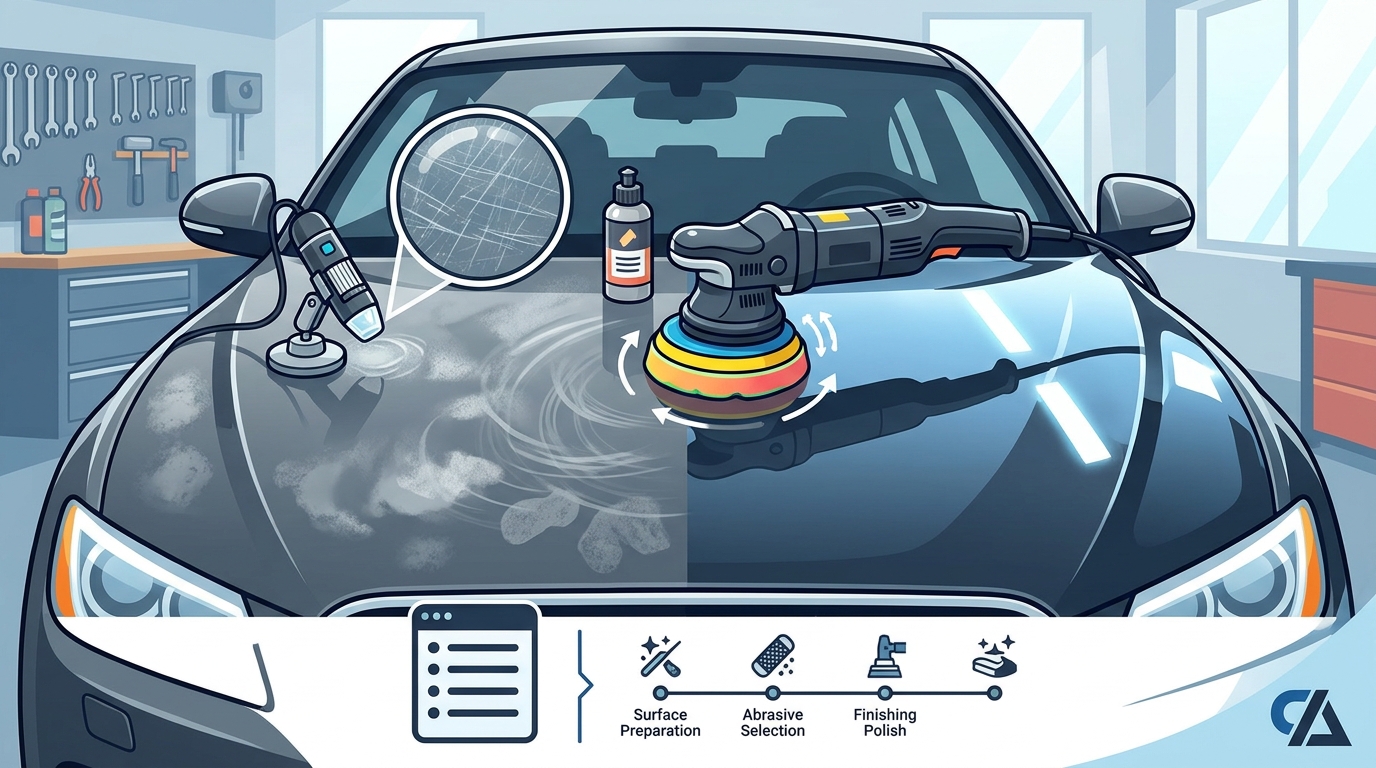
The core mechanism relies on the interaction between the pad, the compound, and the paint. When the machine is in motion, the abrasive particles in the compound act like extremely fine sandpaper. They remove the topmost layer of the clear coat, which contains the defects. Because the clear coat is typically 1 to 2 mils thick, detailers must be precise to avoid burning through it.
At Detail X Mobile Detailing, we utilize professional-grade dual-action polishers that provide the necessary cutting power while maintaining safety. This approach ensures that the paint is leveled without the risk of holograms or heat damage associated with less controlled methods.
Understanding Swirl Marks and Holograms
Swirl marks are fine, circular scratches that appear on the paint surface, often caused by improper washing techniques or automatic car washes. These defects scatter light, making the paint look dull and hazy. Holograms are a specific type of swirl mark created by improper machine polishing, where the machine leaves a pattern of fine lines that look like a rainbow when viewed at an angle.
The difference between a standard swirl and a hologram is the depth and pattern. Standard swirls are random and shallow, while holograms are parallel and often deeper. To fix these, a detailer must use a cutting compound that is aggressive enough to remove the defect but fine enough to leave a smooth finish. This requires a multi-step process, starting with a coarse compound and finishing with a fine polish.
For example, a vehicle that has been through several automatic car washes may have a layer of fine swirls across the entire hood. A single-step polish might not be enough to remove them completely. In such cases, a two-step correction is necessary to ensure the paint is perfectly smooth.
Reversing Oxidation and UV Damage
Oxidation is the chemical reaction between the clear coat and the environment, leading to a dull, chalky, or orange appearance. This happens when the UV inhibitors in the clear coat break down over time. Machine paint correction removes this oxidized layer, revealing the fresh, clear coat underneath. This process is not just cosmetic; it restores the protective barrier of the paint.
The evidence of oxidation is often visible in the paint's color and texture. A fresh clear coat is transparent and glossy, while an oxidized one is opaque and matte. By removing the top layer, the detailer exposes the healthy paint beneath. This is why paint correction is often followed by a protective coating, such as a ceramic coating, to prevent the oxidation from returning.
At Detail X, we assess the level of oxidation before starting the correction. For mild oxidation, a single-step polish may suffice. For severe cases, a more aggressive compound is used, followed by a finishing polish to restore gloss. This ensures that the paint is not only clear but also protected for the long term.
The Role of Compounds and Polishes
Compounds and polishes are the abrasive agents used in machine paint correction. Compounds are more aggressive and contain larger abrasive particles, making them ideal for removing deep scratches and heavy oxidation. Polishes are finer and are used to refine the surface and restore gloss. The choice of product depends on the severity of the defects and the type of paint.
The grit size of the abrasive particles determines the cutting power. A compound with a grit size of 1000 to 1500 microns is suitable for deep defects, while a polish with a grit size of 500 to 1000 microns is used for finishing. Using the wrong product can lead to incomplete correction or damage to the paint. This is why professional detailers use a range of products to achieve the best results.
For instance, a vehicle with light swirls may only need a fine polish to restore its gloss. However, a vehicle with deep scratches from a rock chip or a key scratch may require a coarse compound to remove the defect. The detailer must assess the paint's condition and choose the appropriate product to ensure a flawless finish.
Protecting the Corrected Paint
Once the paint is corrected, it is vulnerable to new defects and oxidation. This is where protective coatings come in. A ceramic coating is a liquid polymer that bonds to the paint, creating a hard, hydrophobic layer. This layer repels water, dirt, and UV rays, protecting the paint from future damage. The application of a ceramic coating is the final step in the paint correction process.
The benefit of a ceramic coating is its longevity. Unlike traditional waxes, which last a few months, a ceramic coating can last for years. This means that the investment in paint correction is protected for a longer period. At Detail X, we offer ceramic coatings that are designed to last for 2 to 10 years, depending on the product and maintenance.
For example, a customer who has their paint corrected and then applies a 5-year ceramic coating will enjoy a glossy, protected finish for half a decade. This is a significant improvement over the few months of protection provided by a wax. The combination of correction and protection ensures that the vehicle looks its best for years to come.
Key Takeaways
- Machine paint correction removes a microscopic layer of clear coat to eliminate defects.
- Swirl marks and holograms are fine scratches that scatter light, making paint look dull.
- Oxidation is a chemical reaction that dulls the paint, and correction removes the damaged layer.
- Compounds are aggressive for deep defects, while polishes are fine for gloss restoration.
- Protective coatings like ceramic coatings are essential to maintain the corrected finish.
- Professional detailers use a multi-step process to ensure a flawless, long-lasting result.
Frequently Asked Questions
How long does machine paint correction take?
The time required depends on the size of the vehicle and the severity of the defects. A single-step correction for a sedan may take 2 to 3 hours, while a two-step correction for an SUV can take 4 to 6 hours. At Detail X, we provide a detailed estimate based on the vehicle's condition.
Can machine paint correction remove deep scratches?
Machine paint correction can remove scratches that are within the clear coat. If a scratch goes through the clear coat and into the base coat, it cannot be removed by polishing. In such cases, a paintless dent repair or a touch-up paint job may be necessary.
Is machine paint correction safe for all paint types?
Yes, machine paint correction is safe for all paint types, including single-stage and multi-stage paints. However, the process must be adjusted for each type. Single-stage paints are more delicate and require a gentler approach to avoid damage.
How often should I get my paint corrected?
Paint correction is not a regular maintenance task. It is typically done once every few years, depending on the vehicle's exposure to the elements. Regular washing and protective coatings can extend the time between corrections.
What is the difference between a compound and a polish?
A compound is more aggressive and is used to remove deep defects, while a polish is finer and is used to restore gloss. Compounds contain larger abrasive particles, while polishes contain smaller particles. The choice depends on the severity of the defects.
Can I do machine paint correction at home?
While it is possible to do machine paint correction at home, it requires specialized equipment and knowledge. Without the proper tools and technique, you risk damaging the paint. It is recommended to hire a professional detailer for the best results.
Experience the Difference with Detail X
At Detail X Mobile Detailing, we bring the expertise of professional paint correction to your driveway. Our team uses state-of-the-art equipment and high-quality products to ensure that your vehicle's paint is restored to its original glory. We serve Sacramento and Placer County, providing convenient, high-quality service without the hassle of a shop visit. To schedule your paint correction, today.